
Reel. Wide. Exposed
We make films for places that live in people long after they’ve left.
The Place as the Story
The Peninsula speaks for itself.
There is a coastline at the southern tip of Africa
that has been drawing people from the other side of the world
for four hundred years.
They come for the mountain.
They come for the ocean.
They come for the light that does something
in the late afternoon
that photographers have been trying to capture
since the first camera arrived here.
Most of them leave with memories.
Almost none of them leave with a film
that shows what it actually felt like to be here.
That is the gap we are here to close.
The Peninsula speaks for itself.
The Southern Cape Peninsula — from Muizenberg to Cape Point, from Kalk Bay harbour to the long wild beach at Noordhoek, from Simon’s Town’s Georgian streets to the 277-year-old farmstead at Kommetjie — is one of the most cinematically extraordinary stretches of coastline on earth. Forbes named Kalk Bay one of the coolest neighbourhoods in the world. Cape Point sits at the convergence of two oceans. Chapman’s Peak is forty kilometres of cliff road above the Atlantic with nothing between you and the horizon but air.
This place deserves to be seen. Properly. Cinematically. In a way that makes someone watching from a city on the other side of the world close their eyes for a moment and think: I need to go there.
That is not a small thing to make. But it is exactly what we are here to make.
We are building our tourism portfolio right now — on the Peninsula we live on, with the knowledge of people who have watched this coastline in every season, every weather, every hour of the day.
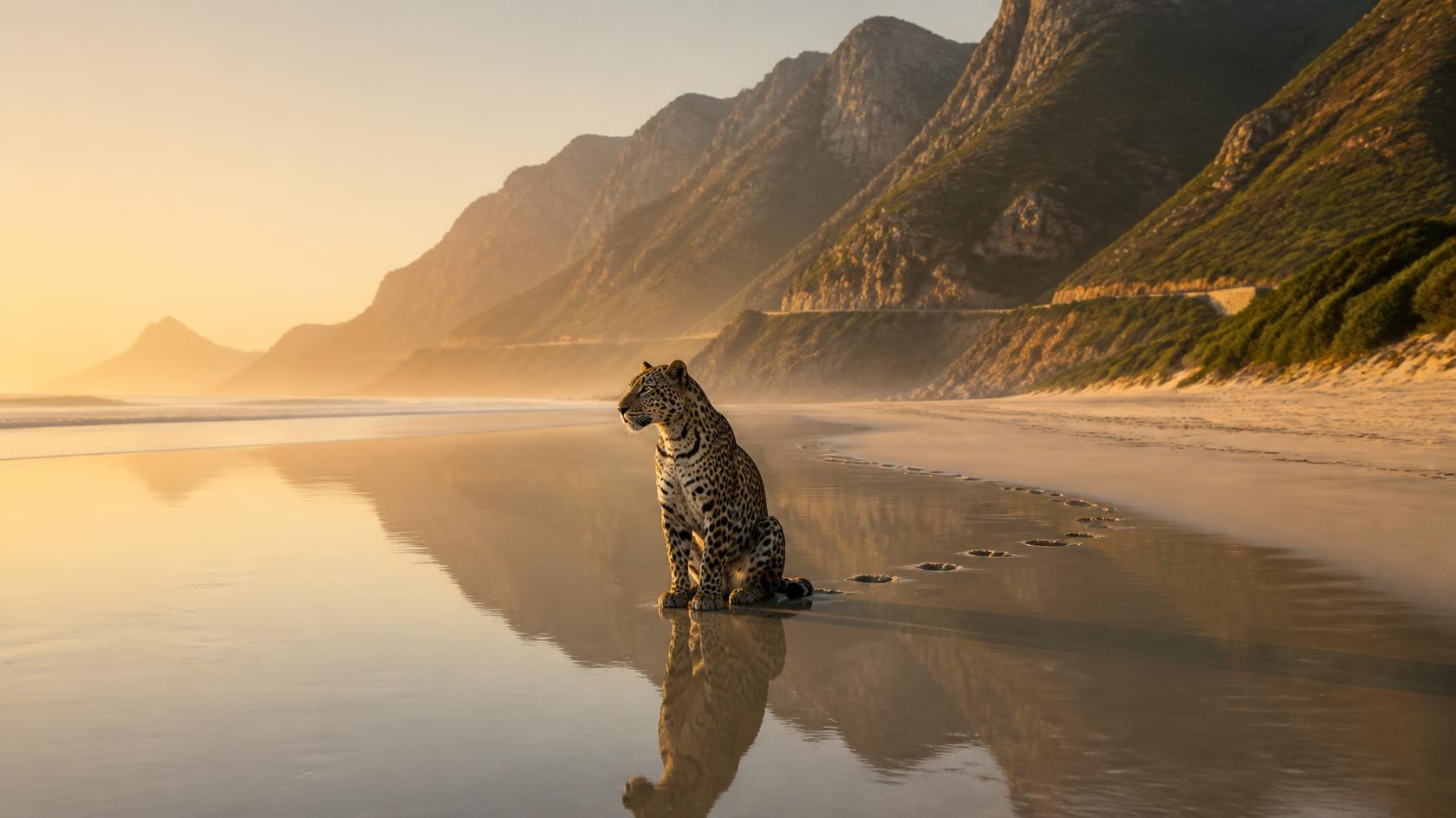
We know that the Simon’s Town Ghost Walk — through 1813 burial grounds, past streets that have not changed in two hundred years — has never been given the cinematic night shoot it deserves. We know that the horse riders who gallop in the surf at Noordhoek at golden hour with Chapman’s Peak behind them are the Peninsula’s defining image, and that nobody has ever put it at the centre of its own film. We know that Cape Point in a winter storm — Atlantic swells, spray twenty metres high, wind that has crossed an entire ocean to arrive at that cliff — is one of the most dramatic natural spectacles on this continent, and it is still waiting to be filmed the way it should be filmed.
We know these things because we live here. We have stood in all of it. And we are going to give this coastline the films it has always deserved — with two cameras, warm colour grading that honours the Peninsula’s particular quality of light, ambient sound that puts the viewer inside the landscape, and the slow unhurried pacing that gives a place its full weight instead of skimming the surface of it.
For tourism operators, destination brands, hospitality businesses, and organisations that need the world to understand what this coastline actually is — we are the people who already know it. Not as visitors. As people who chose to stay.